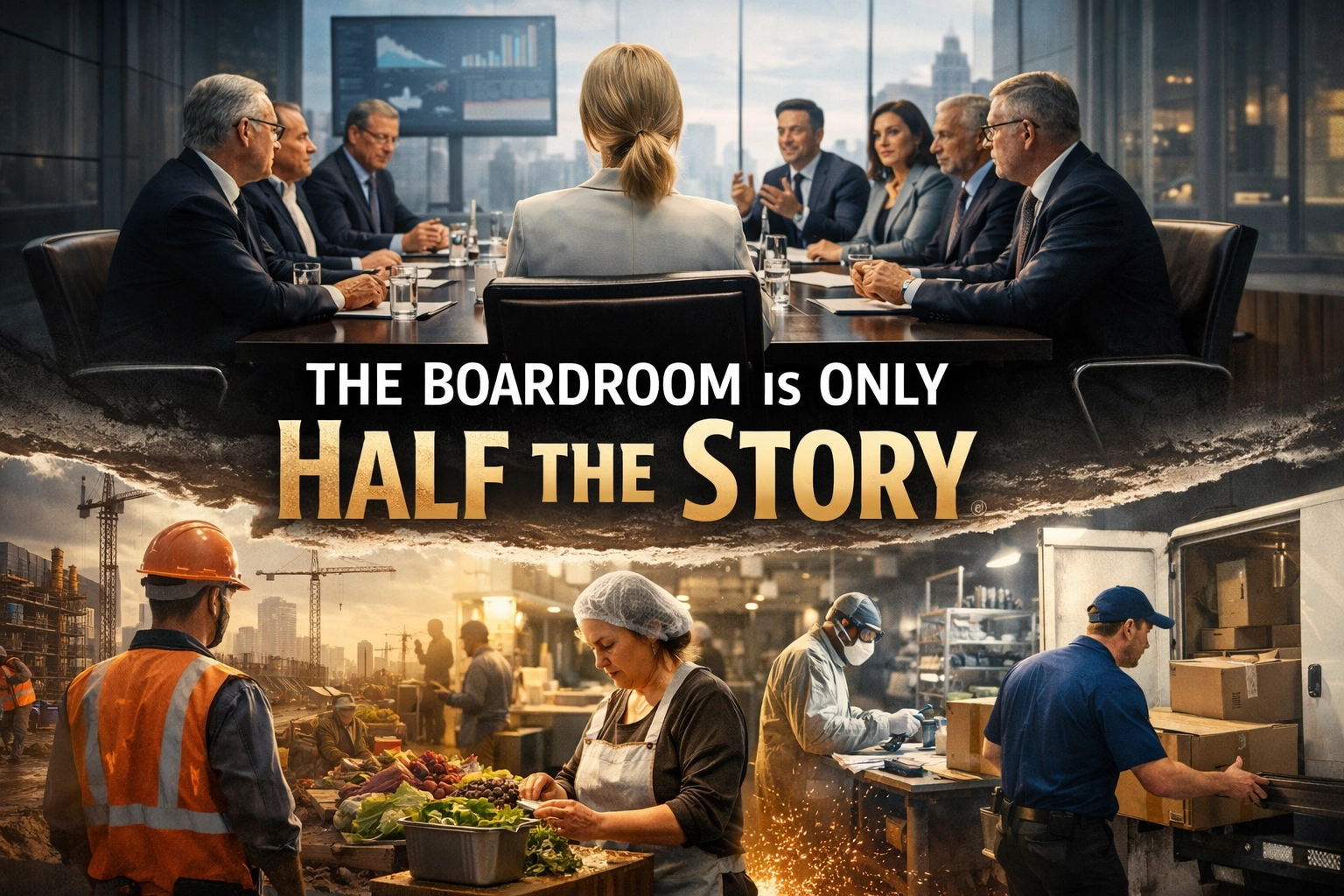
Picture this: muddy boots on a polished boardroom table.
It makes you uncomfortable, doesn't it? That's exactly the point.
Because when it comes to corporate sustainability, there's a massive gap between what gets discussed in the boardroom and what actually happens in the field. And if you're a UK or EU business trying to navigate the new wave of environmental regulations, CSRD, SFI, ESG reporting, you're probably feeling that tension right now.
The boardroom wants clean charts, quarterly targets, and compliance checkboxes. The field needs soil health, supply chain transformation, and farmers who actually trust you enough to change how they've worked for decades.
Both matter. But only one creates lasting impact.
Let's be honest, the regulatory pressure is real.
The Corporate Sustainability Reporting Directive (CSRD) means thousands of EU companies now have to report on environmental impact with the same rigor they apply to financial statements. If you're in a value chain that touches agriculture, forestry, or land use, you're not escaping this one.
Then there's the Sustainable Farming Incentive (SFI) in the UK, which is reshaping how farmers get paid. It's no longer just about production, it's about ecosystem services, carbon sequestration, and biodiversity. If your supply chain depends on UK farmers, their decisions about SFI directly affect your sustainability strategy.
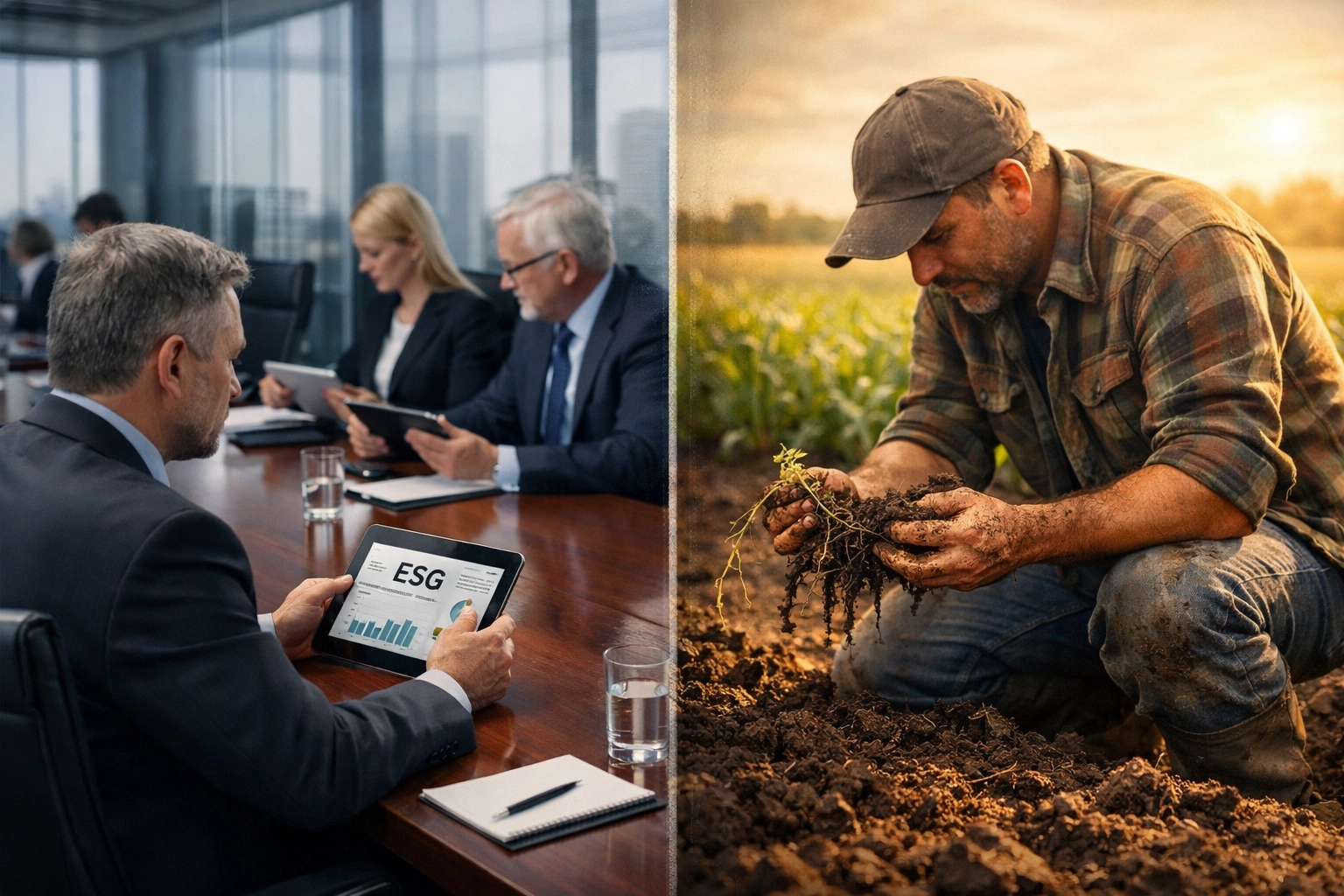
ESG strategy, carbon footprint assessments, net-zero commitments, these aren't optional anymore. Investors want them. Customers expect them. Regulators demand them.
So you build the framework. You hire the consultants. You create the glossy reports.
And then… nothing changes on the ground.
Here's what the boardroom often misses: sustainability doesn't happen in PowerPoint.
It happens when a farm manager decides to trial cover crops instead of leaving soil bare over winter. When a procurement lead realises their "sustainable sourcing" policy is forcing suppliers to tick boxes instead of making real changes. When a landowner chooses long-term soil health over short-term yields.
These decisions are messy. They involve risk, trust, and people who've been burned by corporate initiatives before.
I've worked with businesses who had beautiful sustainability consultancy reports and zero traction with their supply chains. The strategy was solid. The disconnect was in mobilisation and delivery.
Because the people making the boardroom decisions rarely speak the same language as the people making the soil decisions.
This gap is where most corporate sustainability initiatives go to die.
You've got a Head of Sustainability who understands CSRD inside-out but has never walked a farm. You've got agronomists who know soil science but couldn't explain ESG strategy if their job depended on it (which, increasingly, it does).
Someone needs to translate. To mobilise. To deliver.
That's the bit that doesn't show up in the quarterly report, but it's the bit that determines whether your carbon footprint assessment reflects reality or wishful thinking.

I've seen this play out dozens of times:
The boardroom creates the strategy. But someone has to make it real.
This is where the "Safe Pair of Hands" approach comes in.
Mobilisation isn't about grand pronouncements or hitting people with legislation. It's about building trust, speaking both languages, and getting the right people in a room (or a field) together.
It means:
You can't mandate trust. You have to earn it.
And in agriculture, trust is earned slowly, through showing up, through understanding the realities of weather and markets and multi-generational land ownership, through not treating farmers like they're the problem to be fixed.
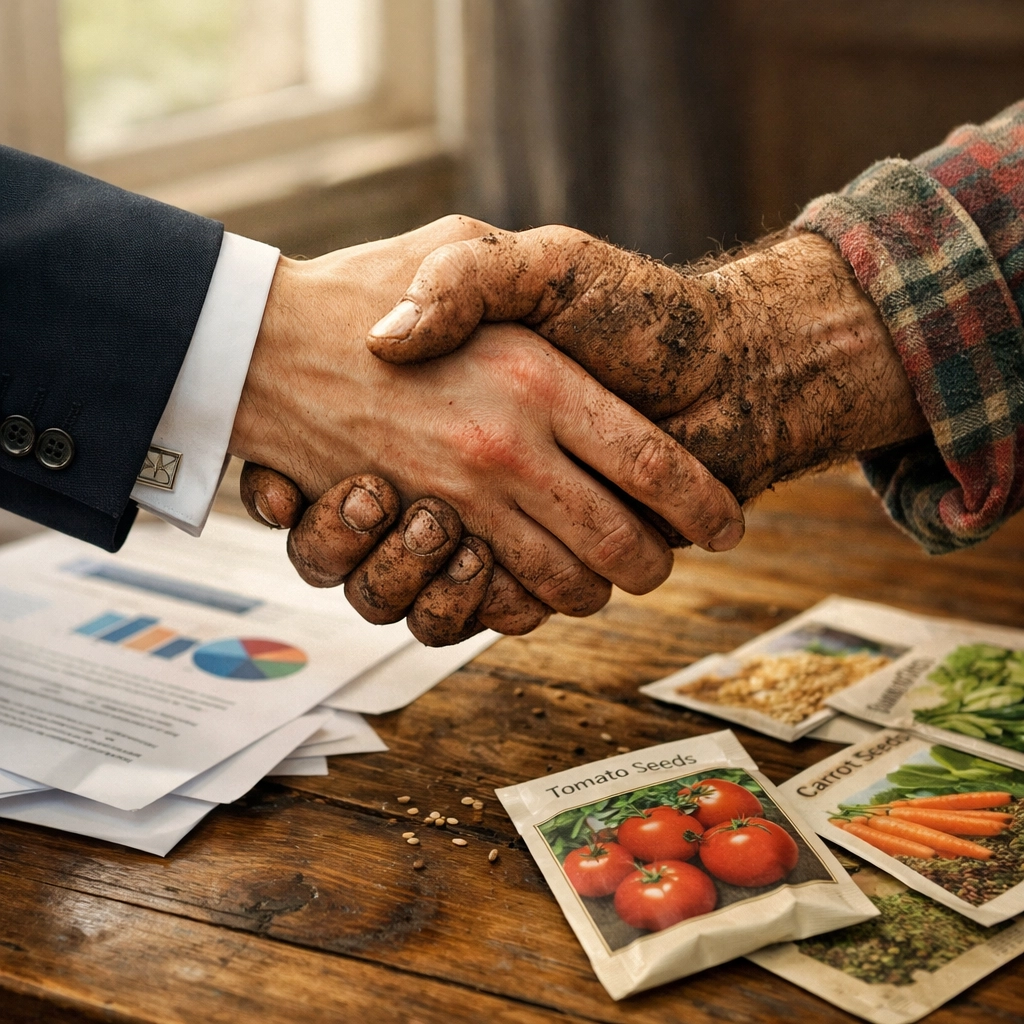
Once you've mobilised people, you still have to deliver.
This is the unglamorous bit. The site visits. The supply chain workshops. The "let's actually work through what this means for your rotation" conversations.
It's checking whether that carbon footprint assessment is based on actual farm data or industry averages (spoiler: if it's averages, it's probably wrong). It's making sure your sustainability consultancy isn't just generating reports that sit in a drawer.
Delivery is where the muddy boots come in.
It's knowing that a beautifully designed ESG strategy means nothing if the people implementing it don't have the resources, the knowledge, or the incentive to make it work.
If you're a UK or EU business in agriculture, food production, or land-based sectors, the next 18 months are critical.
CSRD reporting timelines are kicking in. SFI is evolving. Supply chain due diligence regulations are tightening. Your competitors are figuring this out, or at least pretending they are.
The businesses that thrive won't be the ones with the best boardroom strategy.
They'll be the ones who can actually mobilise their supply chains, deliver real change on the ground, and prove it with data that stands up to scrutiny.
That requires someone who understands both worlds. Someone who can walk into a boardroom and explain why your Scope 3 emissions are a train wreck, then walk into a farm and explain why cover cropping isn't just "extra work."
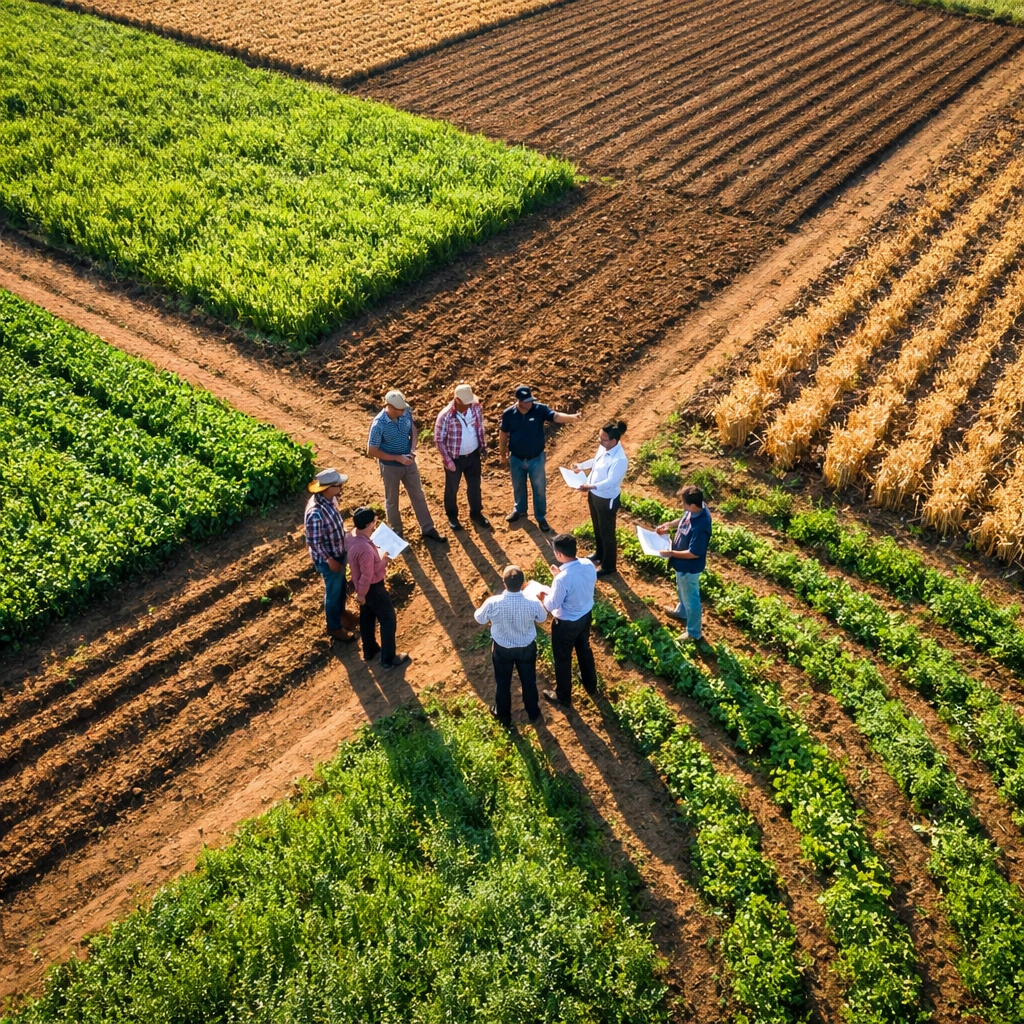
So yes, you need the boardroom half. You need the strategy, the compliance, the frameworks.
But if that's all you've got, you're just generating paperwork.
Real sustainability happens when boardroom strategy meets field-level delivery. When ESG commitments translate into supply chain transformation. When carbon targets become cover crop trials.
That's where the muddy boots belong: not tucked away in a cupboard, but right there on the table, reminding everyone that the other half of the story matters just as much.
Because sustainability isn't about choosing between strategy and soil.
It's about bridging the gap between them.
If your business is navigating CSRD, SFI, or trying to turn sustainability strategy into supply chain reality, you don't need another report. You need someone who's done this before: someone who speaks both languages and knows how to mobilize the people who'll actually make it happen.
That's what Seeds to Thrive does. Mobilisation and delivery. Strategy that works in the soil, not just on the page.
Let's talk about what the other half of your story looks like.
We deliver happiness by co-creating with you to deliver epic transformation that enables your people to flourish and your business to grow sustainably.
We help conscious businesses and people to feel appreciated, included and inspired.